
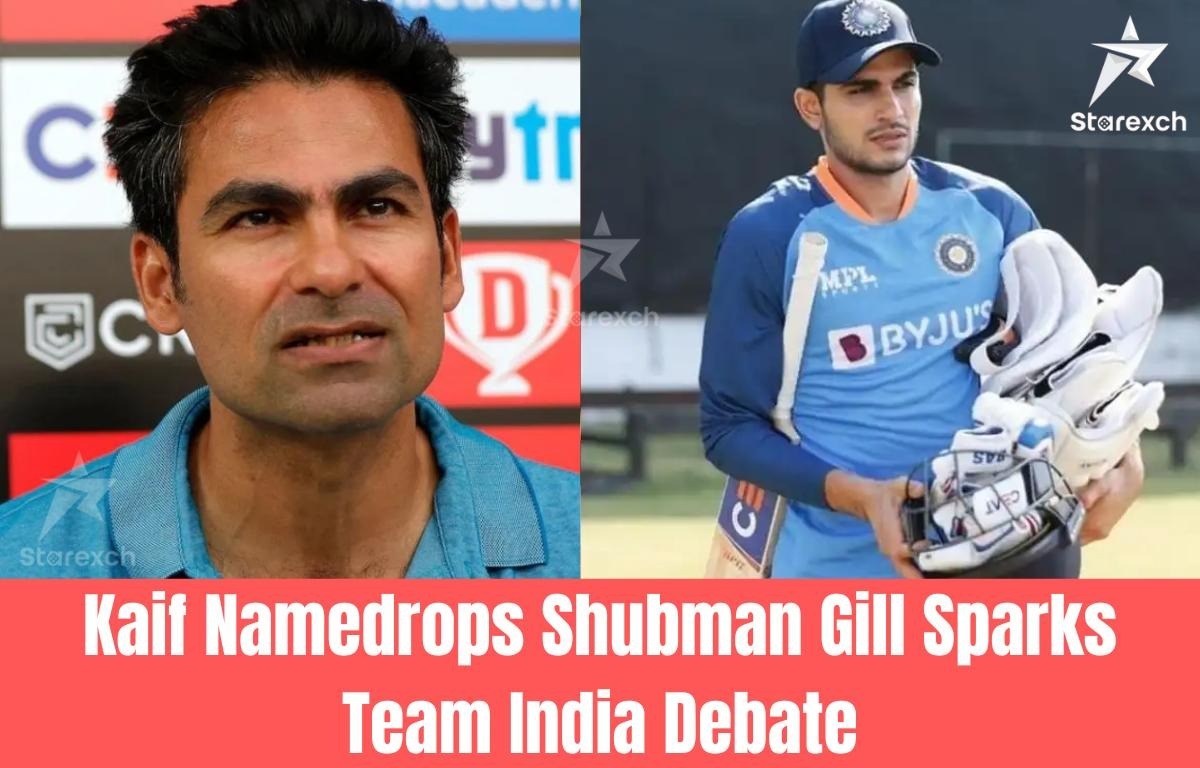
Kaif Namedrops Shubman Gill: Alleged Unfair Treatment Of Washington Sundar
The Starexch report highlights Mohammad Kaif’s criticism of Team India after Washington Sundar’s handling raised questions among fans globally. Kaif namedrops Shubman Gill while questioning why Sundar was sent to bat, though he had discomfort during the first ODI.
Washington Sundar only bowled five overs and came to bat at number eight, remaining unbeaten on seven runs. Additionally, Kaif thought that the team could have sent Kuldeep Yadav or a batter instead of risking Sundar’s health unnecessarily. Fans following Starexchange coverage observed how inconsistencies in player protection policies have created growing debates on management strategies.
Kaif Namedrops Shubman Gill: Comparing Sundar And Gill Handling
Kaif namedrops Shubman Gill while reminding viewers of the Kolkata Test incident when Gill suffered a neck injury batting against South Africa. Gill walked off after playing three balls and was rested for India’s second Test and the ODI series entirely. However, the same caution was not applied to Washington Sundar, sparking discussion among cricket experts on Starexch platforms globally.
Former India cricketer stated Kuldeep, Siraj, or Prasidh Krishna could have filled Sundar’s batting role without risking injury unnecessarily. Therefore, Kaif emphasised that consistent player management should prioritise health, avoiding controversial decisions that could impact performance and team morale.
Kaif Namedrops Shubman Gill: Sundar’s Performance And Team Decisions
Despite being unwell, Washington Sundar held one end while KL Rahul finished India’s successful chase in the first ODI decisively. Kaif namedrops Shubman Gill to highlight contrasting management approaches for injured players in high-pressure games under international scrutiny.
He stated sending Sundar in a run-a-ball scenario was unnecessary and could have been avoided by using alternate players in the lineup. Ayush Badoni replaced Sundar for the remaining ODIs, bringing batting depth while also providing part-time bowling options, noted by Starexch coverage.
Such substitutions reflect how emerging talent is integrated into Team India cautiously while balancing health risks and match requirements effectively.
Kaif Namedrops Shubman Gill: Fan Reactions And Strategic Implications
Fans responded strongly to Kaif namedrops Shubman Gill statements, questioning fairness in player management and the role of veteran oversight. Several social media discussions highlighted how consistent policy, especially regarding injuries, impacts team performance and player trust over time.
The reports noted that fans debated whether Sundar’s involvement could have been reduced without compromising India’s chase efficiency. Cricket experts suggested that similar situations in youth and senior cricket require pre-planned contingency strategies, minimising risk to key players consistently.
The Issue:
- Ayush Badoni, replacing Sundar, debuted for India A in 2025 and played for Lucknow Super Giants in IPL, showcasing a well-rounded skill set.
- Kaif namedrops Shubman Gill to draw lines without throwing unwanted pressure.
- Badoni’s batting all-rounder role enables part-time bowling and key partnerships, providing Team India flexibility highlighted across Starexch analysis.
- Experts say that strategic rotations and careful workload management maintain performance while ensuring injury recovery for both senior and emerging talents.
Kaif Namedrops Shubman Gill: Historical Context And Injury Policies
Kaif namedrops Shubman Gill, referencing high-scoring games where injured players were rested to prevent aggravation, showing inconsistency in recent decisions. He argued that Washington Sundar’s deployment contradicted the principles applied to Gill, raising concerns over health prioritisation in Team India.
The platform coverage highlighted that proactive injury management reduces long-term risks while maintaining competitive output, balancing player well-being with tactical requirements. Former cricketers recommended establishing clear protocols for handling minor injuries, ensuring uniformity and preventing criticism from commentators or fans globally.
Overall, Kaif’s commentary was more on learning from past experiences and applying best practices consistently across all matches, formats, and player types effectively.
Kaif Namedrops Shubman Gill: Final Take And Starexch Insights
In conclusion, Kaif namedrops Shubman Gill to underline inconsistencies in injury handling for Team India during high-pressure games recently. The platform reports to show importance on size balancing player protection, strategic substitutions, and match priorities to avoid unnecessary risks while achieving results efficiently.
Washington Sundar’s case reveals challenges in aligning squad health, performance, and tactical execution across multiple formats.
Fans following Starexchange insights can observe evolving policies and roster management that ensure long-term team stability and competitiveness.
Ultimately, Kaif namedrops Shubman Gill to encourage consistent decision-making, highlighting lessons for future match scenarios involving injured or emerging players.
FAQs
-
- Why was Washington Sundar sent to bat despite injury concerns?
Kaif criticised the decision, noting Kuldeep or other batters could have taken that position safely. - How did Shubman Gill’s injury affect India’s earlier Test and ODI series?
Gill missed batting duties to protect his neck, establishing precedence in player safety policies. - Who replaced Washington Sundar for the remaining ODIs?
Ayush Badoni replaced Sundar, adding batting depth and part-time bowling options. - Why did Kaif namedrops Shubman Gill in his criticism?
Gill’s previous injury management was contrasted with Sundar’s situation to highlight inconsistent treatment. - What role does Starexch play in analyzing these decisions?
Starexch provides detailed coverage of lineup changes, injury updates, and management strategies influencing team selection debates.
- Why was Washington Sundar sent to bat despite injury concerns?
