
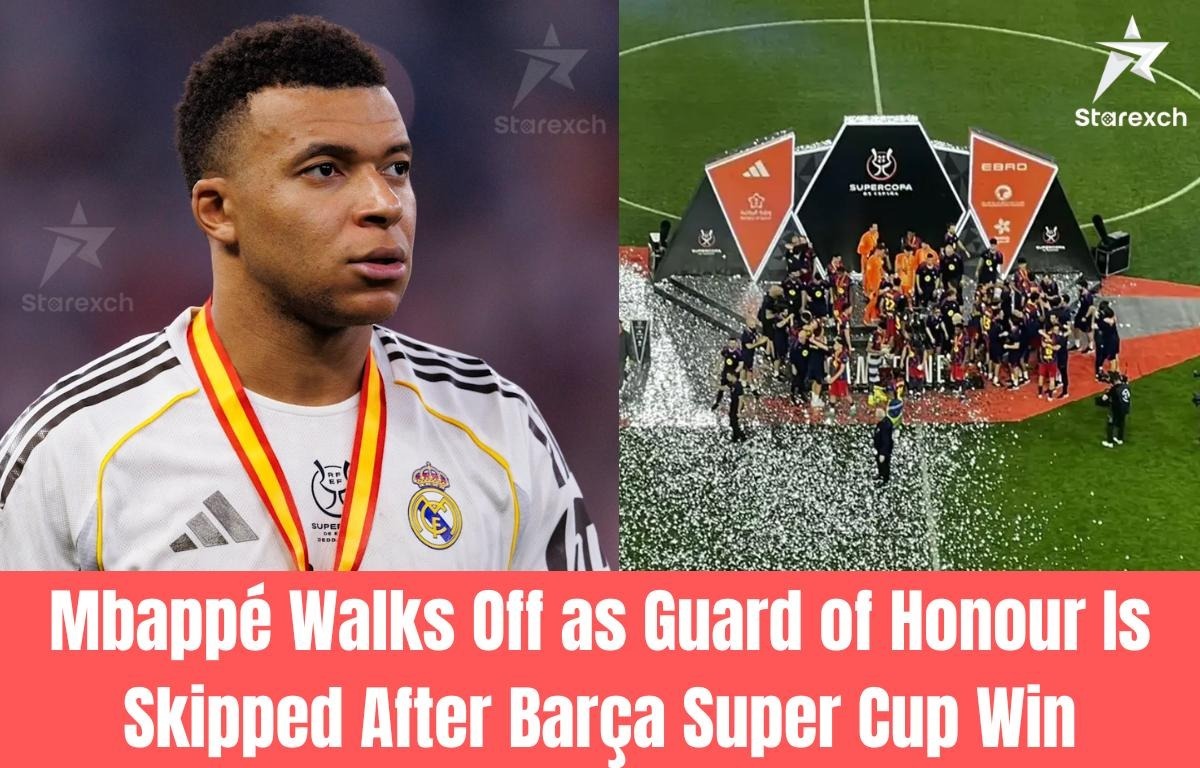
Mbappe Refuses Guard of Honour After Real Madrid Loses to Barcelona
Sometimes pride can take over rules and traditions, don’t they? Barcelona had a great victory against Real Madrid in the Spanish Super Cup in 2026, and the whole situation afterwards was almost as impactful as the match itself.
Kylian Mbappé, one of football’s most shining stars, came in as a sub but was not able to change the scoreboard. Nevertheless, it was not the missed chances that were spoken all over the news and the Starexch platform; it was his choice not to attend the guard of honour for Barca.
Mbappe refuses guard of honour and walks off the pitch early. This tiny yet bold step caused discussions all over the football world. For a little while, it seemed like the Clasico had trickled beyond its 90 minutes; now it was a matter of sportsmanship and personal integrity.
After the Spanish Super Cup Final, what happened?
Tension was strong during the live match. Fans were on nerves until the last whistle, with Barcelona dominating 3–2. The Real Madrid players were supposed to take part in a little ceremony recognising the champions of the competition, but they were clearly dissatisfied. In order to recognise their opponent’s win, the losing team typically forms a guard of honour and claps.
However, Mbappé broke the custom. He told his teammates to go directly to the dressing room, according to several Spanish media reports. The action was swift, forceful, and aggressive.
Why Did Mbappe Refuse Guard of Honour?
Football is full of pride and pressure. Coming on as a substitute without scoring may have left Mbappé frustrated. Starexch points out a few reasons for the reaction:
- Mbappé could not find the back of the net and may have been visibly disappointed.
- Real Madrid vs Barcelona is more than a match; it’s a clash of history, pride, and fan expectations.
By leaving early, Mbappé showed personal choices over tradition.
Fan and Media Reactions as Mbappe Refuses Guard of Honour
The response was immediate and divided. Spanish outlets labelled the act “unsportsmanlike,” while fans split into two camps.
- Supporters of Mbappé: Praised his action and focus on performance. They argued that celebrating the opponent after a tough loss could feel weak.
- Critics: Questioned the gesture as rude and disrespectful. For them, it showed a lack of professional courtesy. Mbappe refuses guard of honour has become a case study for this debate.
Are Guards of Honour Mandatory?
No. Players and teams can choose whether to participate. Refusing is rare, but not prohibited. The decision becomes controversial mainly when a high-profile star like Mbappé is involved.
How Players Typically Respond
In most matches, players usually:
- Clap for opponents briefly
- Thank the fans for their support
- Respect ceremonial traditions
But when the stakes are enormous, such as in a Clásico, emotions often override protocol. Mbappé’s decision reflects the tension and intensity that can shape an athlete’s behaviour in elite football.
Impact on Mbappé’s Reputation
- Competitive fire: Not willing to celebrate, showing focus on performance and pride.
- Weak Behaviour: A momentary break from sportsmanship that contrasts with expected professional behaviour.
Expert Opinions
Football experts on Starexch suggest that emotional reactions are natural in such matches. Some fans see it as a missed opportunity to not show maturity.
Coaches often stress that athletes should balance pride with tradition. In matches like the Clásico, however, these ideals frequently collide, leaving players in a difficult position where every gesture is scrutinised.
Why Fans Should Care About This Moment
Moments like these go beyond a single match. They reflect the human side of athletes; their emotions, reactions, and personal codes. For fans, it’s a chance to discuss values in sport:
- Should personal pride ever outweigh tradition?
- How should star players handle ceremonial expectations?
- Does competitive intensity excuse skipping customary gestures?
Mbappe refuses guard of honour and gives fans a window into the pressures and thought processes of elite athletes during high-stakes games.
Conclusion
Starexch shows a powerful example of how different elements like pride, tension, and competition affect football players’ manners. When the Clásico or any other big match gets played again, you should focus not just on the scores but also on the players’ gestures. People make gestures as often as football players make their performances; thus, they frequently reveal a lot about a player.
FAQ
- Can skipping a guard of honour affect a player’s relationship with teammates?
Yes, it can create tension if teammates expect participation in post-match traditions. - Do referees or officials ever comment on guard of honour refusals?
Rarely, as it is not a rule, but officials may note it in match reports. - Are there any other situations like this?
Yes, there have been a few instances, though they are uncommon and usually less controversial. - Does skipping a guard of honour influence fan loyalty or perception?
It can, as it might affect the opponent team and the respect of an individual as well. - Are there cultural differences in how teams handle post-match ceremonies?
Absolutely, traditions change by league and country, affecting how gestures are sensed.
