
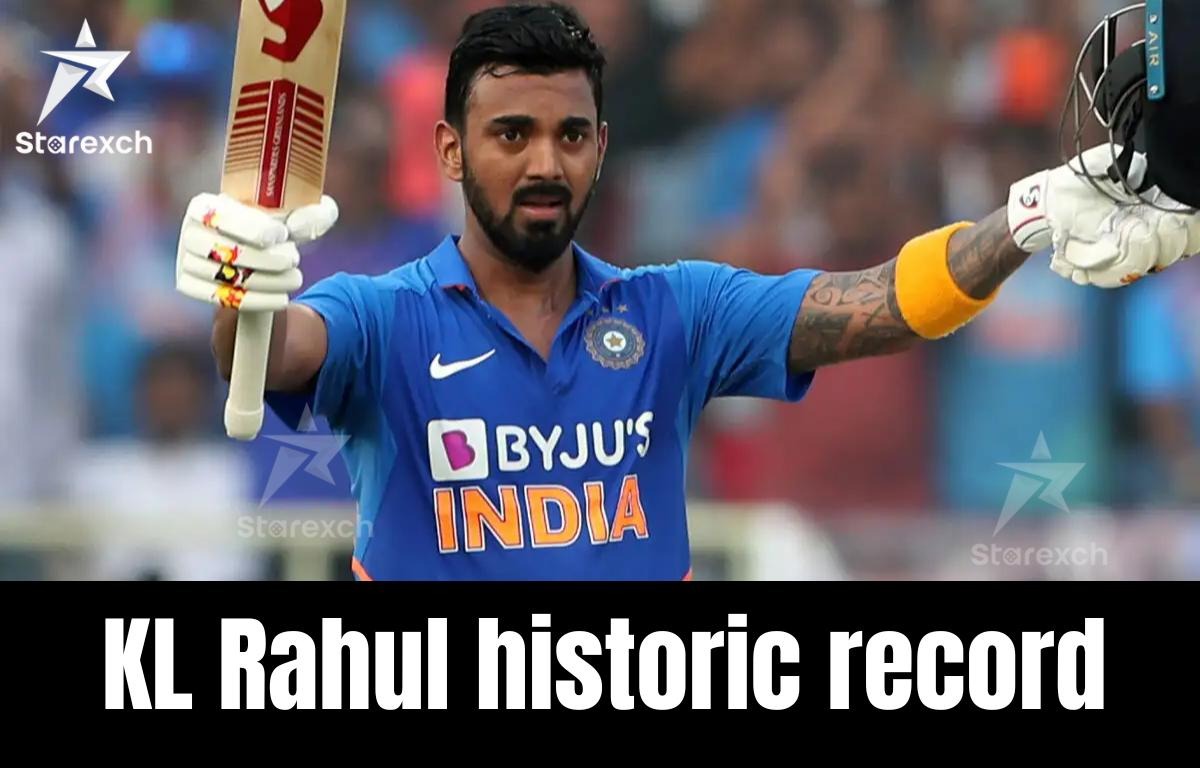
KL Rahul Breaks Sunil Gavaskar Record: Creates History to Become First Player…
India national cricket team vs South Africa national cricket team, 2nd ODI: The result may not have gone India’s way in the series against South Africa at Shaheed Veer Narayan Singh International Stadium in Raipur, but it was an electrifying encounter of the second one-day international, which the hosts lost by 4 wickets.
But within the devastation came a bright spark: KL Rahul’s calm, unbeaten 66. Beyond its significance in adding to the run count, that knock also rewrote history. That innings: KL Rahul breaks Sunil Gavaskar record, becomes the Indian captain with the most ODI fifties.
KL Rahul already has six fifties in his short tenure as India’s captain over 12 innings! That is more than Sunil Gavaskar: Gavaskar led India in ODIs through five fifties in 31 innings. This landmark also speaks volumes of Rahul’s temperament and ability to build innings under pressure, captaincy notwithstanding.
This is a milestone not only in Rahul’s captaincy but also in how Starexchange assesses the performance of leadership as a batsman. It shows that turning starts into meaningful contributions doesn’t have to be the hundreds; it has these large values to a team.
The Raipur ODI: Big Scores, High Drama
The circumstances of Rahul’s record-smashing innings only make it more special. Batting first, India had set a huge target of 358/5. The bedrock of that total was a fabulous 195-run partnership between Virat Kohli and Ruturaj Gaikwad. Both of them scored 100s, which was the first for Gaikwad in ODIs and their second for Kohli this series. But it was KL Rahul’s late steel, the unbeaten 66, that offered support as the innings wound down.
India 110 for 9 (Goswami 35, Shikha 14, Taylor 3-22) v England. Despite the voluminous total, India failed to defend it. Match Summary South Africa hunted down 359 on the back of a match-winning hundred from Aiden Markram, some thunderous hits from Dewald Brevis, and a measured half-century from Matthew Breetzke. Dew came into play, and the pressure mounted on the Indian bowlers as the target slipped away. Despite a fight back from bowlers like Arshdeep Singh and Prasidh Krishna, South Africa’s calm chase ensured the result.
KL Rahul Breaks Sunil Gavaskar Record
And it’s not just the raw numbers that distinguish this record. Indian captains of the past have used centuries to stabilise innings. Centuries make the headlines; they are exalted as history-making feats of domination. But Rahul’s record turns that notion on its head. Having now scored the most fifties without ever making a hundred. Also, having done it in just 12 innings, Rahul epitomises the reality and worth of consistency over grandeur.
For 40 years, Sunil Gavaskar’s mark endured. Known as one of India’s finest, Gavaskar´s ODI credentials don´t shine quite so brightly as his Test career. A ratio of fifties to not dismissals of 5:1 in ODIs over the course of 31 innings as captain was already a mark of reliability. But now KL Rahul has slipped ahead of him in a different kind of captaincy resilience, and it shows in the bounce-backability.
It’s a reflection of a wider shift in cricket dynamics too: in contemporary ODIs, for all the depth to batting and willingness towards aggressive match-ups, timely scores of fifty are just as important as centuries. Rahul’s numbers are ample proof that leadership and run-scoring abilities can exist in the same man, minus three-figure scores.
What It Means for Rahul and Team India
This record is more than just a milestone for KL Rahul. It sends a message: even in defeat, strong individual performances and responsible captaincy can leave a mark. It is another layer to his legacy, beyond simply a quality batsman, but as a leader in the clutch.
For Team India, it whispers of a shifting batting philosophy. The team might have left itself years of fretting about the calibre of its top-order batsmen, when perhaps it ought to simply appreciate consistent, match-building performances all the way down. With captains and senior batsmen capable of consistently making 50s instead of trying to convert into hundreds, no-risky in tight ODIs or high-pressure chases could prove useful.
And from the perspective of fans and analysts, this record provides for an interesting discussion as to whether registered half-centuries count for more than sporadic centuries under a captain. Just maybe something can indeed be salvaged from this mess, KL Rahul’s feat suggests.
Conclusion
KL Rahul breaks Sunil Gavaskar Record in the Raipur ODI. By breaking a record set by Sunil Gavaskar, a cricketing colossus in India, Rahul is not only part of the history books but also changes the context and meaning of captaincy performances in today’s ODI game.
At a moment when cricket is changing quickly: when batsmen play with greater depth, in an aggressive vein and to vastly contracted contests, Rahul’s success said that constancy. It’s an example of balance, discipline and leadership by presence instead of theatrics.
For fans, for critics and even for aspiring cricketers, it has a take-home message: being great in cricket isn’t simply about centuries; sometimes greatness is the effort of resilience, reliability and consistency.
These are the moments we take time to recognise here at Starexch, championing not just the grand achievements but the small daily wins and new bars they raise.
FAQ
1. Why is the record significant?
The record is important because it changes the compass bearing for what successful leadership might mean in ODIs. Instead of the focus on hundreds or match-winning hundreds, it recognises bread-and-butter scoring as equally important.
2. Does this mean a new approach to batting by Indian captains?
Potentially yes. Rahul’s stats show how consistency pays off. In contemporary limited-overs cricket, pitches are flatter and batting deeper, and chases are more aggressive than ever before.
3. Where does this landmark stack up with prior leaders?
Historically, most focus was on centuries and batting innings under pressure. Though the likes of Sunil Gavaskar were decent captains, their performance in terms of scoring fifties wasn’t that great. KL Rahul’s feat in many fewer innings hints at a more dependable brand of leadership batting.
4. What does this mean for Rahul’s future as captain?
It bodes well. That this record is how and not with it he has done so illustrates that Rahul can be a leader in the true mould of dependability.
