
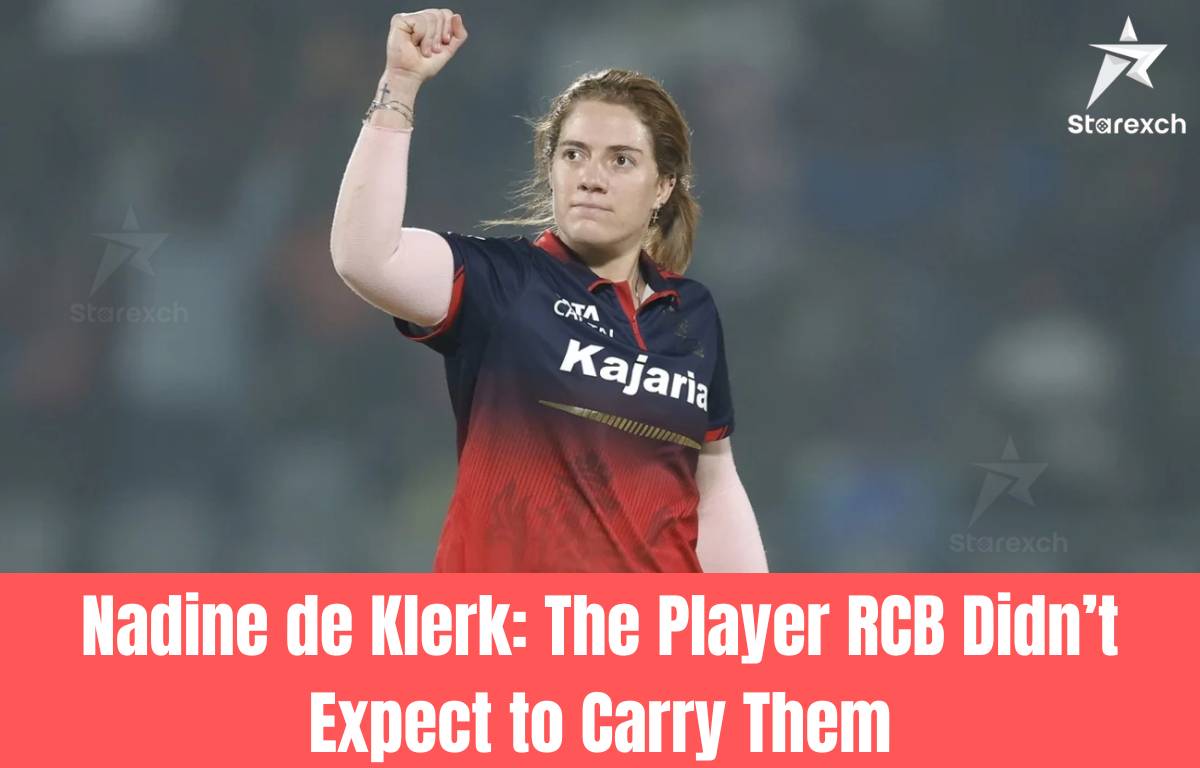
How Klerk Powers RCB into WPL Final by Owning the Toughest Overs
Klerk Powers RCB into WPL Final was not a moment of chance. It was the result of clarity under pressure. Thursday night, Nadine de Klerk delivered one of the most controlled spells of WPL 2026. RCB owned the night.
The pressure was high. UP Warriorz still had hope. One loss would end their campaign. In that tension, de Klerk stepped forward and took control. Four wickets later, the battle was done. RCB booked a direct entry into the final. The result reshaped the league narrative.
This season has tested depth and character. RCB lost Ellyse Perry this season. Others stepped up. None did it with more calm than de Klerk. Starexch explains why Klerk Powers RCB into WPL Final now feels unavoidable.
Why Klerk Powers RCB into WPL Final in WPL 2026
Every tournament reaches a point where execution matters more than intent. WPL 2026 reached that point early. De Klerk met it head-on. She bowled when batters looked settled. She returned when the hitters prepared for the finish. She delivered both times. Against UP Warriorz, she broke a 74-run opening stand. That stand had given UPW belief. Her first ball removed Meg Lanning. Momentum shifted instantly.
That dismissal did not happen by chance. De Klerk read the boundary dimensions. She bowled outside off toward the longer side. Lanning took the bait. The catch stuck. Four balls later, Amy Jones fell lbw. The scrambled seam did the work. Moments like these explain why Klerk Powers RCB into WPL Final reads as fact, not hype. Pressure demanded discipline. Discipline arrived on time.
Why de Klerk dominates key phases
Starexch highlights de Klerk owning the middle overs this season. No bowler has taken more wickets than her between overs seven and sixteen. She also leads dot-ball pressure in that phase. Batters struggle to rotate strike against her. This puts batters under pressure and eventually makes mistakes.
The platform analysis highlights bowlers who influence matches without drama. De Klerk fits that profile perfectly. She does not chase magic balls. This control explains why Klerk Powers RCB into WPL Final resonates across tactical discussions.
How Metrics Reveal Her Middle-Over Mastery
The metrics focus on pressure indicators. Dot balls matter, and wickets matter more. De Klerk delivers both. She forces batters to hit against the wind. She attacks stumps when boundaries shorten and adjusts fields quickly. Those adjustments show awareness, not instinct alone.
Starexchange analysis often highlights players who reduce scoring options. De Klerk reduces them consistently. That skill defines tournament bowlers.
How de Klerk Closed the Match at the Death
Death overs usually have a lot of pressure. De Klerk shows none. When she returned late against the UP Warriorz, the boundary lengths flipped. She adjusted immediately. She bowled straight lines. And aimed to attack pads and stumps. Sophie Ecclestone fell lbw. Simran Shaikh followed soon after. Both dismissals came from reading batter movement early.
Her final figures read four for twenty-two. The spell felt heavier than the numbers. UP Warriorz lost belief long before the innings ended. Among bowlers with at least five death overs, only one concedes fewer runs per over. That detail matters. It confirms why Klerk powers RCB into the WPL Final.
What makes her death-over mindset different
Some bowlers defend at the death. De Klerk attacks control. She bowls to plans. She accepts singles. She removes boundaries from the equation. Control beats pace in the closing overs. De Klerk proves it repeatedly.
Leadership without noise defines her RCB role
Leadership often arrives quietly. De Klerk leads by repetition and reliability. She takes responsibility without gestures. Teammates trust that. RCB needed stability after losing Ellyse Perry. De Klerk filled that space through execution. She bowled in power plays during the middle overs and at the death. That versatility explains why Klerk Powers RCB into WPL Final feels like a collective rise driven by one anchor.
Simplicity as a strength, not a limitation
Anya Shrubsole described de Klerk’s approach as simple. That simplicity wins matches. She repeats lengths. She repeats fields and repeats plans. Elite cricket rewards clarity. De Klerk shows it. Starexchange trend reports often flag such players as high-impact contributors. This season confirms that view.
The Mentality Behind the Performance
De Klerk embraces pressure openly. She enjoys decisive moments. She wants responsibility when matches tighten. Her words reflect belief, and actions confirm it. She does not retreat when games swing but steps forward. This mentality separates good seasons from defining ones. It explains why Klerk Powers RCB into the WPL Final, which now defines the 2026 season.
Key impact zones this season
- Middle overs through dot-ball pressure
- Death overs through stump-to-stump accuracy
- Leadership through consistency under stress
What lies ahead for RCB and de Klerk
Klerk Powers RCB into WPL final with balance and belief. She will likely bowl in the hardest overs again. She will welcome that. Watch her first spell closely. It often sets the tone. It often seals outcomes. If WPL 2026 has a defining figure, her name stands near the top.
Follow the final with attention to detail with Starexch. Pressure reveals everything.
FAQs
1: Why does Klerk Powers RCB into the WPL Final stand out this season?
She delivered wickets and control in the most decisive phases of matches.
2: How many key overs has de Klerk bowled for RCB in WPL 2026?
She leads the side in middle and death-over usage.
3: How does Starexch help analyse such performances?
Starexch tracks phase impact, dot balls, and pressure efficiency.
4: What changed for RCB after losing Ellyse Perry?
De Klerk absorbed responsibility through consistency and execution.
5: Why is de Klerk considered a pressure specialist?
She seeks decisive moments and performs best when pressure peaks.
