
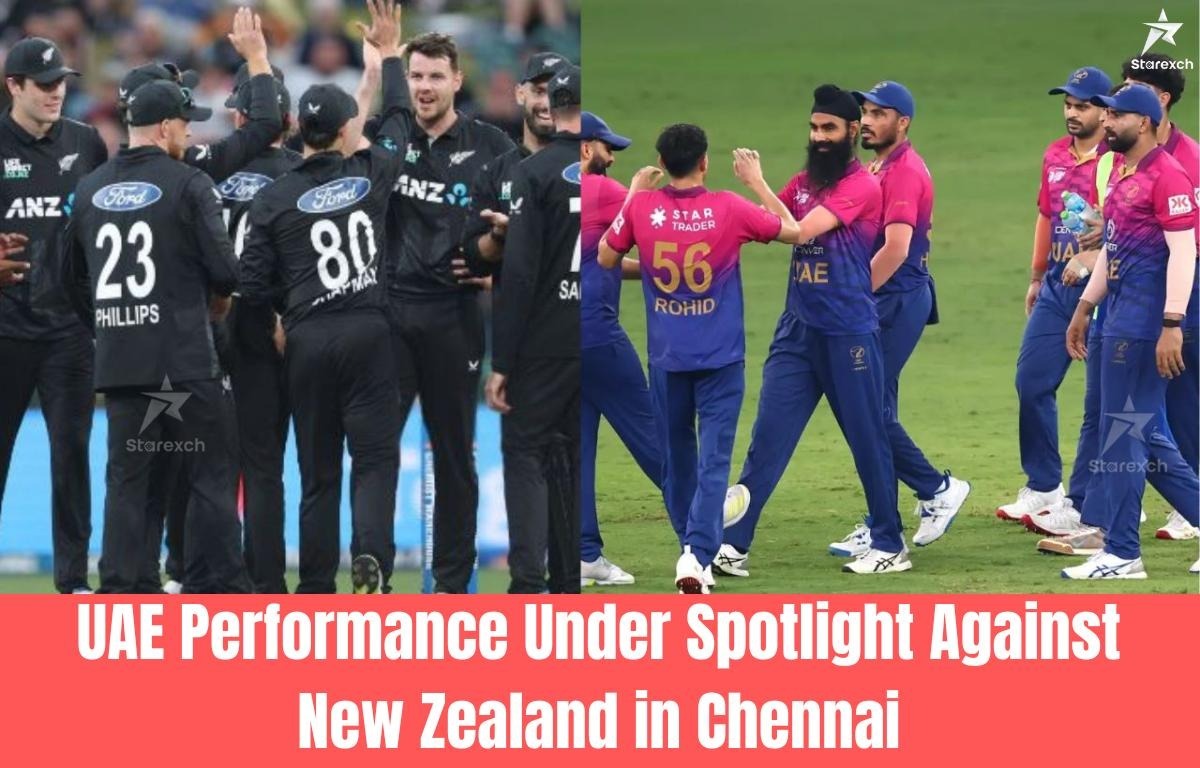
UAE Performance in T20 WC: Can They Shock NZ in Chennai Today?
There is always a curiosity for the UAE’s performances in international tournaments, and there is no doubt that there is a lot on the line in this matchup against NZ. From the very first overs, UAE cricket team’s performance can be gauged in terms of ambition because they chose to bat first after winning an important toss. The implication here is that this decision establishes belief in batting depth, composure, and flexibility against seasoned bowling combinations.
Moreover, UAE performance in T20 in high-pressure matches have shown improvement when expectations are low, and pressure remains minimal. Accordingly, Starexchange fans are now watching with interest as this tale of a brave underdog unfolds, especially on Chennai’s tricky track.
UAE Performance in T20 WC: Group D Pressure and Possibility
Group D already looks strong, and UAE performance faces constant examination alongside NZ, SA, AFG, and CAN. Earlier, NZ defeated AFG convincingly, so UAE performance must disrupt momentum rather than chase confidence later.
However, UAE performance in T20 historically improves when teams underestimate their tactical awareness and collective discipline. Thus, this encounter represents an opportunity disguised as difficulty for an ambitious associate nation. Captain Muhammad Waseem addressed the challenge calmly, showing leadership clarity while embracing the magnitude of the contest confidently. Importantly, UAE performance often mirrors Waseem’s intent, because he sets the tempo both mentally and technically upfront.
Additionally, his aggressive batting approach encourages teammates to play without fear against reputed bowling lineups. As a result, UAE performance depends heavily on early stability rather than reckless stroke-making. Therefore, Starexch states that leadership execution becomes as crucial as individual skill today.
UAE Performance in T20 WC Against Elite Bowling Attacks
NZ captain Mitchell Santner expected bounce, trusting fast bowlers to exploit Chennai’s red-soil assistance early. Accordingly, UAE performance against pace bowling faces examination, particularly during powerplay overs, where mistakes multiply quickly.
However, batting first allows UAE performance to dictate tempo rather than respond nervously to scoreboard pressure. Meanwhile, NZ retained their winning combination, signalling confidence and minimal tactical experimentation.
Thus, UAE performance in T20 must create discomfort through rotation, partnerships, and calculated risk-taking.
Experience often defines World Cup moments, and NZ rarely lose composure during tight phases under pressure. Still, UAE performance thrives when opponents expect predictability rather than innovation from associate teams. Therefore, variation in shot selection, running intensity, and bowling plans becomes essential. Additionally, Starexchange highlights disciplined fielding could prevent boundary leakage and frustrate an otherwise clinical batting order. Ultimately, execution rather than reputation will determine outcomes here.
UAE Performance in T20 WC and Off-Field Disruptions
Beyond cricketing challenges, UAE performance absorbed disruption after Muhammad Zohaib’s sudden departure before the tournament began. The Emirates Cricket Board cited disciplinary reasons, although details remain pending clarification publicly. Consequently, UAE performance loses potential depth, which matters significantly during compressed World Cup schedules. However, such moments sometimes strengthen collective resolve rather than weaken dressing-room unity.
Therefore, squad adaptability becomes a hidden metric defining campaign success. Teams at this level cannot rely solely on individual brilliance across multiple matches consistently. Instead, UAE performance in T20 historically improves when contributions arrive from unexpected names across departments. Thus, opportunity emerges for fringe players seeking international credibility and career momentum. Moreover, tournament pressure often accelerates growth for associate squads willing to learn rapidly. Hence, adversity may quietly shape UAE performance positively over time.
UAE Performance in T20 WC Compared With Netherlands Momentum
Earlier, Netherlands stunned observers through disciplined bowling rotation and impactful all-round performances in New Delhi. Bas de Leede’s performance highlighted how associate teams thrive when roles remain clearly defined. Similarly, UAE performance requires clarity in bowling usage, workload management, and batting responsibilities.
Rotating bowlers preserves energy while maintaining pressure during the middle overs effectively. Therefore, learning from parallel associate success stories becomes essential. Namibia’s total looked competitive, yet the Netherlands chased calmly through partnerships and boundary timing.
Likewise, UAE performance must focus on calculated accumulation rather than boundary obsession early. Sustained partnerships often force opponents into defensive fields, reducing wicket-taking opportunities. Moreover, composure under lights and scoreboard pressure differentiates winning teams consistently.
UAE Performance in T20 WC Amid Group Dynamics
Group D remains unforgiving because South Africa and NZ bring tournament pedigree and physical intensity. Consequently, UAE performance must target realistic wins while maintaining competitive margins against stronger sides.
Canada’s unpredictability further complicates qualification within the group. Therefore, every match contributes psychologically as much as mathematically to tournament journeys. Momentum often shifts unexpectedly during compressed schedules.
NZ and South Africa’s upcoming clash may shape group leadership trajectories decisively.
Hence, UAE performance in T20 WC in the remaining fixtures becomes crucial for qualification hope sustainability.
Targeting wins against comparable opposition remains non-negotiable at this stage. Additionally, net run rate awareness influences tactical decisions throughout innings. Every over matters more than teams often realise initially.
The Broader Road Ahead for UAE Performance
UAE performance carries symbolic weight for emerging cricketing nations globally seeking relevance. Competitive displays inspire grassroots participation and justify ICC expansion initiatives worldwide. However, resource gaps and exposure differences still challenge consistent progress.
Therefore, UAE performance must balance ambition with realism across tournament phases.
Growth emerges through repeated exposure rather than isolated results. Platforms like Starexch continue attracting fans interested in global cricket narratives beyond traditional powerhouses.
Such platforms amplify underdog stories, creating visibility for associate teams worldwide.
Therefore, UAE performance benefits from increased global attention and fan engagement.
Exposure fuels sponsorship interest and long-term infrastructure development gradually.
Thus, every competitive showing contributes beyond immediate results.
FAQs
-
- Can the UAE realistically defeat NZ in Chennai conditions?
UAE performance must peak collectively because disciplined execution occasionally neutralises experience advantages in T20 formats. - Does batting first improve the UAE’s chances significantly?
Yes, because UAE performance benefits from scoreboard pressure and defined roles while avoiding chasing uncertainty. - How important is Muhammad Waseem’s role today?
UAE performance often mirrors his intent, leadership clarity, and early batting momentum. - Are associate teams improving globally in World Cups?
Absolutely, because structured leagues and exposure steadily elevate associate performance standards. - Can UAE qualify from Group D realistically?
Qualification remains difficult, but UAE performance competitiveness matters regardless of final standings.
- Can the UAE realistically defeat NZ in Chennai conditions?
