
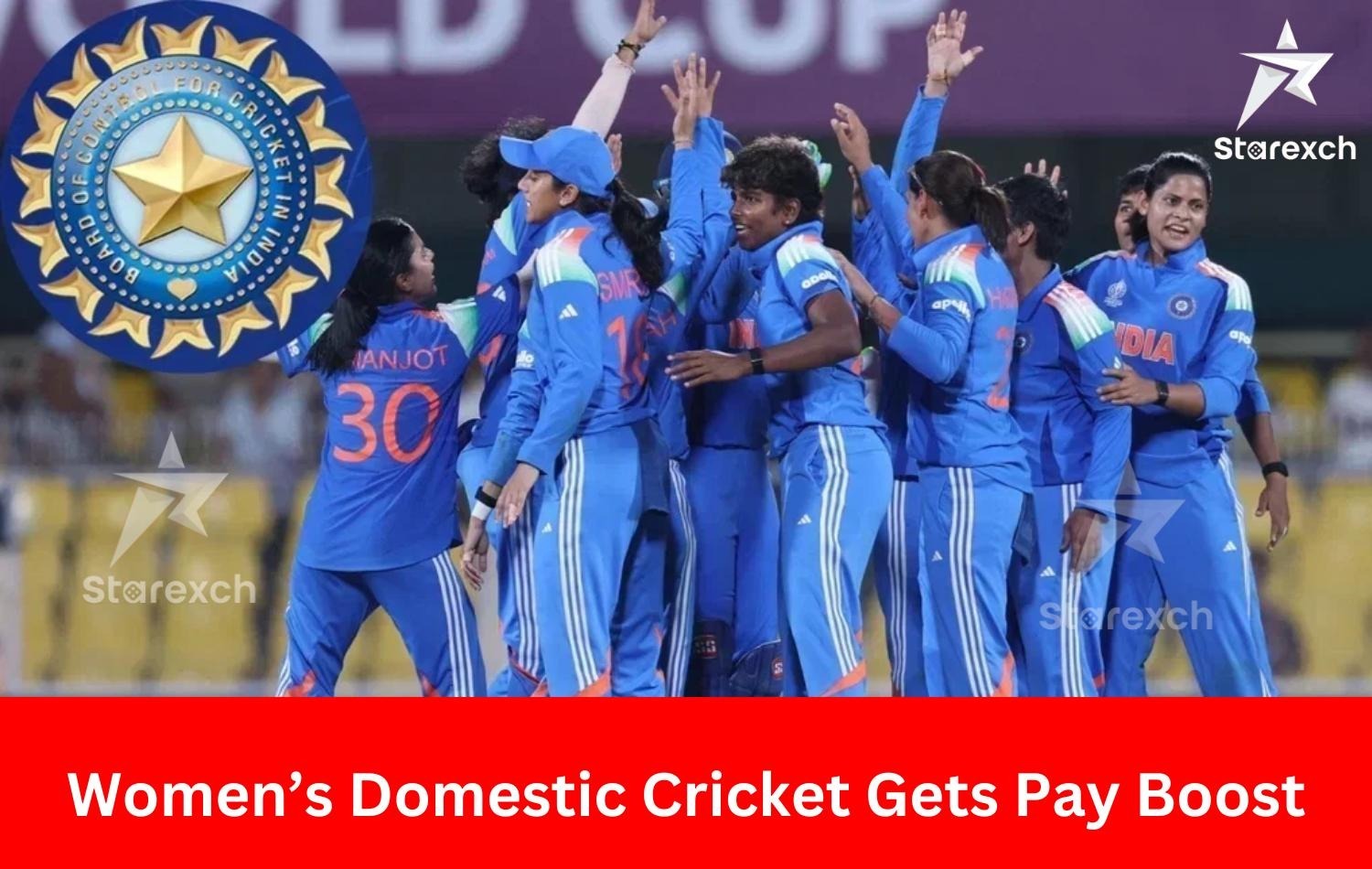
Women’s Domestic Cricket Pay Revision: What the BCCI’s Next Move Means
After a long time, the pay gap for women in cricket has been taken to the discussion table.
On December 22, the BCCI will examine the Women’s Domestic Cricket Pay structure at its Apex Council meeting.
Many fans celebrated India’s ODI World Cup win this year, but behind that success lies a domestic setup that still needs better financial support. Starexchange opens that this meeting may be the first major step toward fixing it. Here is a detailed look.
Why Women’s Domestic Cricket Pay Needs a Fresh Look
This revision is more than a routine policy update. It addresses concerns raised by senior players, domestic coaches, selectors, and state units. The current structure offers limited support for training, travel, gear, and recovery. These costs impact young talents the most.
The review also arrives at a crucial time. Central contracts for women may change soon, and men’s contracts are expected to shift as well. The council must align the new Women’s Domestic Cricket Pay system with India’s growing cricket landscape.
To understand why this meeting is important, Starexch looks at what players earn today.
- Senior women earn ₹20,000 per one-day game.
- U23, U19, and U15 players earn ₹10,000 per match.
- Reserve players get 50% of the match fee.
- Red-ball events lack a well-defined pay category.
Many players accept local jobs or coaching work to cover costs. A fairer structure can help them focus on training rather than survival.
What Can the New Women’s Domestic Cricket Pay Structure Fix?
The BCCI plans to address long-standing gaps. The review may touch three key clusters: senior payments, age-group support, and red-ball categories. Each part influences how the domestic system grows.
Key Areas Expected to Change in Women’s Domestic Cricket Pay
The Apex Council is likely to refine several layers of the structure. Below are the areas under focus, explained with deeper context.
Senior Player Payments Need Clear Upgrades
Senior women carry significant roles in domestic cricket. They mentor young players, anchor line-ups, and maintain high performance levels across formats. Yet they receive ₹20,000 per match, which barely covers annual training costs.
A revised amount can improve financial security. It can also help players train year-round without depending on outside work. This shift supports better on-field performance and reduces dropouts from the circuit.
Age-Group Pay Structure Must Support Growth
U23, U19, and U15 cricketers form the next generation of India’s talent pool. Their current ₹10,000 per game does not reflect rising gear prices or travel demands. A higher rate lets families support long training cycles with less stress. It also keeps players motivated through the long path from junior cricket to the senior stage. Stronger age-group payments help create a wider and more stable pipeline.
Red-Ball Tournament Category Needs Structure
The women’s zonal red-ball format returned recently. But its payment model is not formalised. This gap creates uncertainty for teams and discourages deeper red-ball investments. A clear pay bracket will bring parity across match types. It also encourages players to develop long-format skills, which helps selectors spot all-round ability and strengthens India’s bench.
Reserve Player Benefits Must Improve
Reserve players currently receive half of the match fee. These players train as hard as the main XI. They also keep squads flexible during long tournaments. A higher base pay helps them stay committed. It also builds healthier competition for spots. Better support here can strengthen depth at both the domestic and national levels.
How Central Contracts Link to Women’s Domestic Cricket Pay
A shift in Women’s Domestic Cricket Pay may push the BCCI to upgrade central contracts as well. Today, the highest women’s bracket stands at ₹50 lakh, which is below the men’s Grade C.
A revised domestic structure must align with national progress. With India’s ODI World Cup win, players expect a contract model that reflects global standards.
Central contracts for men will also be reviewed. Rohit Sharma, Virat Kohli, and other senior names may see changes due to format choices. Shubman Gill’s expanded leadership role may influence his grade.
Starexch states that updates link back to domestic cricket because the entire payment system must stay consistent and fair.
What Does the BCCI Meeting Mean for the Cricket Ecosystem?
The meeting will not only cover player payments. It will also look at umpire and referee fees, digital platforms, and structural logistics. These updates can help improve match quality and viewer experience. They also support transparent systems for fans and state associations.
Cricket platforms like Starexchange follow these developments closely. Changes in Women’s Domestic Cricket Pay influence interest, player visibility, and competitive strength across levels.
Why This Revision Matters for the Future of Women’s Cricket
The upcoming decision is more than a policy note. It shapes how young girls view cricket as a career. A strong financial base supports mental health, training, and long-term planning.
It also builds trust in the system. When players see clear pathways, they stay longer and develop greater skills. Fans then enjoy higher-quality cricket, and India becomes more competitive on the global stage.
The ODI World Cup win proved India’s progress. But to sustain momentum, the domestic system needs stronger foundations. The revision of Women’s Domestic Cricket Pay is that foundation.
Conclusion
India is at a turning point in women’s cricket. A fair upgrade to Women’s Domestic Cricket Pay can reshape the sport, support players across levels, and create a healthier future for the game.
If you follow Indian cricket closely, stay with Starexchange for updates after the Apex Council meeting. The changes may redefine how the next generation of players grow into national stars.
FAQs
1. How is Women’s Domestic Cricket Pay expected to change this season?
It may increase across match formats to better support players.
2. Does Women’s Pay cover all age-group levels?
Yes, U23, U19, and U15 players fall under the same pay framework.
3. Are reserve players included in Women’s Domestic Cricket Pay updates?
Yes, they receive a percentage of the revised match fee.
4. Do women’s Pay differ between red-ball and white-ball games?
It often varies based on match duration and tournament structure.
5. Can changes in Women’s Domestic Cricket Pay affect contract grades?
Yes, updated match fees can influence future central contract slabs.
